
Introduction
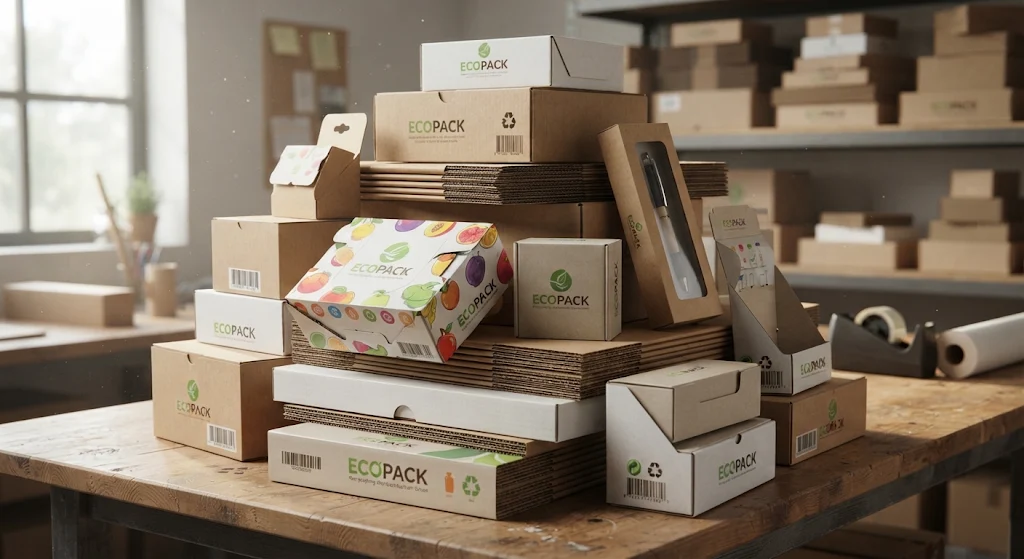
Every branded custom cardboard box that protects goods, tells brand stories and delivers a memorable unboxing experience starts far before printing and die-cutting. Its journey begins with cellulose fibers, either from fresh wood or recycled waste paper.
Many buyers only focus on artwork, size and quotation, yet overlook how every manufacturing stage defines box strength, print effect, sustainability and final quality. This article walks you through the full production chain of custom cardboard boxes, from pulp preparation to finished packing and shipment, helping you understand what makes high-quality custom packaging reliable.
1. Pulp Preparation: Raw Fiber Foundation
Two mainstream pulp sources are widely adopted in packaging mills: virgin kraft pulp and recycled pulp (OCC, old corrugated containers).
- Virgin pulp: Wood logs are debarked and chipped. Wood chips go into a high-pressure digester for kraft chemical cooking. Lignin is dissolved away, leaving pure, tough cellulose fibers. This pulp delivers excellent burst strength and stiffness for heavy-duty packaging.
- Recycled pulp: Waste cardboard and recovered paper are soaked and pulped in a hydrapulper. Contaminants such as plastic, staples and glue residues are removed through multi-stage screening and cleaning. Recycled fibers are refined and blended properly to meet packaging standards. After cleaning and refining, pulp slurry is ready for papermaking. Most modern factories mix virgin and recycled pulp to balance performance, cost and eco-friendliness.
2. Papermaking: Produce Linerboard & Corrugating Medium
Pulp diluted into low-concentration fiber slurry flows onto the Fourdrinier paper machine wire mesh. Water drains gradually, fibers interlock and form a continuous wet paper web. The wet web passes through press rolls for dewatering, then steam-heated dryer cylinders to evaporate residual moisture. Surface sizing and calendering follow to boost surface smoothness, water resistance and printing adaptability. Two key paper rolls are produced here:
✅ Linerboard : Flat outer and inner skin of corrugated board, supports printing and bears surface impact.
✅ Corrugating medium : The fluted middle layer, designed to absorb shock and build cushioning structure. Paper rolls are tested for basis weight, burst index, moisture and ring crush strength before leaving the paper mill.
3. Corrugating: Form Corrugated Board
Paper rolls are loaded onto the corrugator line. The medium paper is preheated and fed into heated corrugating rolls. The rolls shape flat medium into regular flutes (A/B/C/E/F flute options for custom orders). Food-grade starch adhesive is applied onto flute crests. At the single facer station, fluted medium bonds to one linerboard to form single-face board. Then the board moves to double backer section, where the second liner is glued and bonded under heat and pressure. The continuous combined board is cooled, trimmed and cut into standard sheets. Different flute profiles serve different custom needs: E-flute for fine retail boxes, B-flute for printing and stack resistance, C-flute balances cushion and stacking, A-flute for heavy shock protection.
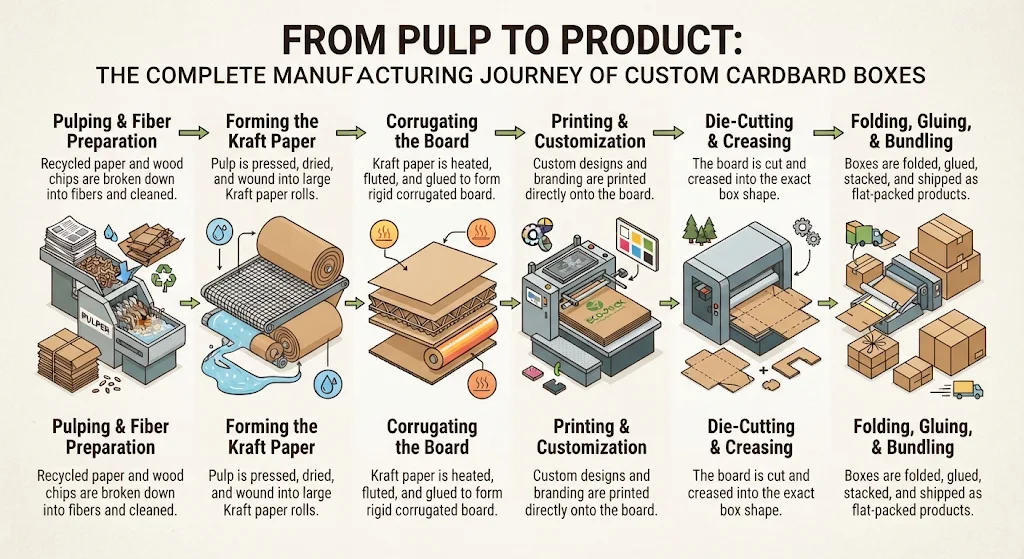
4. Customization Phase: Printing, Scoring & Slotting / Die-Cutting
This is where generic cardboard turns into your unique custom box.
- Printing: Flexo printing is the most common option for corrugated packaging. Custom logos, brand graphics, barcodes, handling symbols and product text are printed directly on linerboard. For high-end retail orders, digital printing or pre-print lamination is available for richer color gradients.
- Scoring & Slotting: Custom crease lines are pressed on the board to ensure clean folding. Slotters cut box flaps and locking tabs for regular slotted containers (RSC).
- Die-cutting: For special custom structures — gift boxes, display boxes, boxes with handles, windows or irregular outlines — a custom steel die cuts the exact contour, ventilation holes and hand holes as per your dieline. All parameters strictly follow the customer’s structural drawing and artwork file.
5. Folding & Gluing / Stitching
Printed and die-cut box blanks go into the folder-gluer machine. The glue flap is coated with adhesive, and the box blank is pre-folded and bonded automatically. For extra-heavy packages, stitching (wire stitching) is adopted instead of gluing for stronger seam connection. Finished box blanks are kept flat for space-saving transport. They remain collapsed until end-users fold them up for packing goods. This is a core advantage of corrugated custom packaging.
6. Quality Inspection & Finishing QC
Quality control runs through the whole line, while final inspection focuses on these items:
- Dimensional tolerance against custom specification
- Printing clarity, color consistency, no blur or missing ink
- Crease quality: no cracking on liner when folded
- Glue joint strength, no delamination or opening
- Surface damage, dirt, scratch check
- Moisture control to avoid softening in humid environment Defective products are sorted out. Qualified boxes are counted and stacked neatly.
7. Bundling, Packing & Shipment
Qualified custom boxes are bundled with plastic strapping or wrapped in stretch film for dust and moisture protection. Shipping marks, packing list labels are attached as requested. We can arrange FOB, CIF or DDP delivery terms. Flat-packed cartons are loaded into containers. When the cargo reaches your warehouse, you receive stacks of ready-to-use custom packaging.
Conclusion
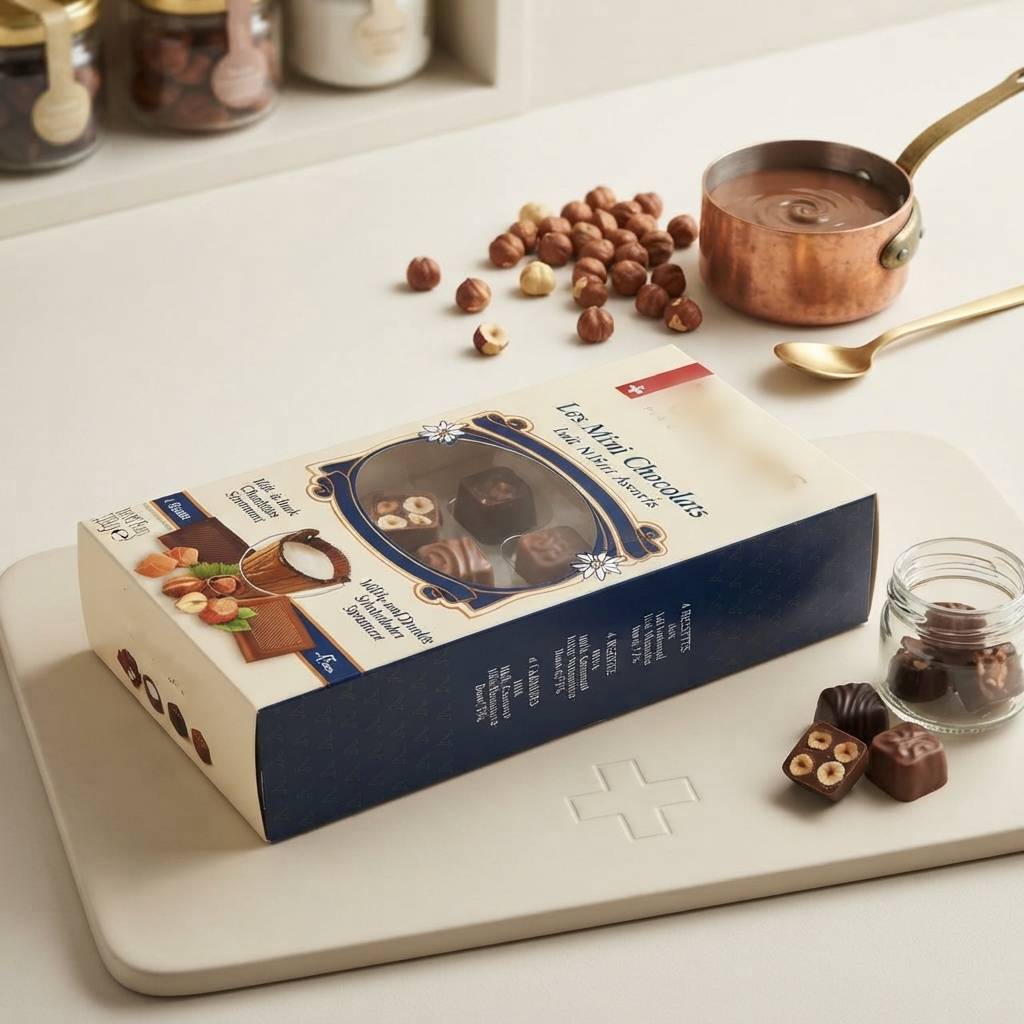
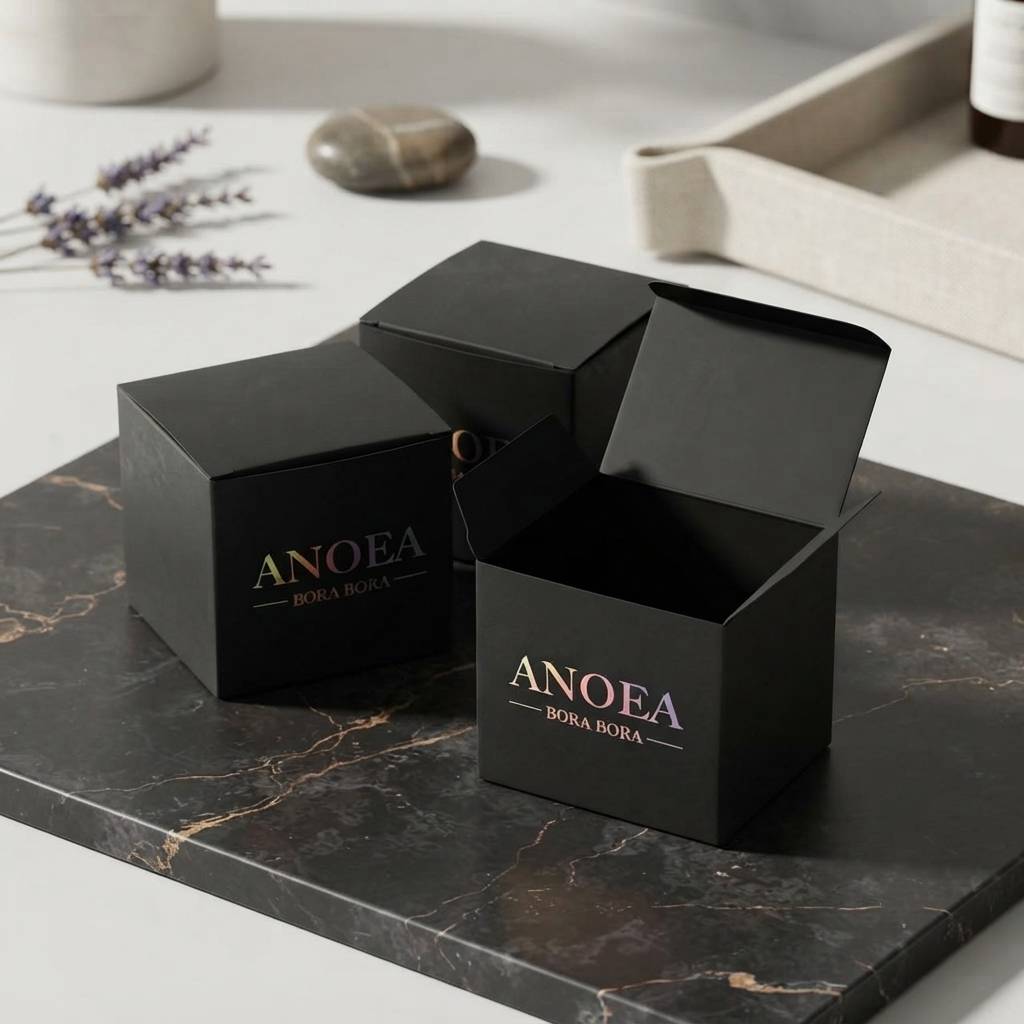
The journey of custom cardboard boxes is a perfect combination of material science, precision machinery and bespoke design. Pulp quality defines fiber strength; corrugating structure decides cushion performance; printing and converting deliver brand personalization.
When you source custom packaging, it is not only about picking a box style or approving artwork. Understanding this complete manufacturing chain helps you communicate requirements clearly, select suitable flute types and materials, and get stable, sustainable packaging aligned with your brand value.